How AI Agents Are Revolutionizing Marketing Operations?


Every day, most marketing teams, probably 99% of them, are stuck running campaigns, digging through data, and tweaking performance by hand. That’s where AI agents can step in. Think of them as smart assistants doing the heavy lifting, so marketers can focus on what matters: strategy, creativity, and keeping their brand voice on point.
According to Gartner, AI agents are set to independently handle 15% of daily workplace decisions by 2028, up from less than 1% in 2024. The trend is already visible in marketing: AI agents help teams work smarter, act faster, and make data-driven decisions in real time.
AI marketing agents are autonomous software systems that can make decisions, execute tasks, and optimize workflows with minimal human intervention. Unlike traditional AI tools, which mostly provide reports or recommendations, these agents act on insights directly. They can adjust campaigns, personalize content, score leads, and reallocate budgets automatically. In other words, AI agents handle the operational work, while human marketers focus on strategy, creativity, and brand storytelling.
Here are the most common and impactful ways AI agents drive results in marketing and adtech:
The numbers don’t lie: 88% of digital marketers are using AI every day, and nearly all businesses plan to invest more in AI tools over the next few years. AI‑powered automation saves teams 6+ hours per week on repetitive work, drives 320% more revenue in automated campaigns, and helps marketers act faster with real‑time insights. What’s more, adoption has jumped from 29% to 76% in just a few years, showing AI has moved from experimental to essential. (Source & Source)
Integrating AI agents into your marketing stack delivers multiple benefits:
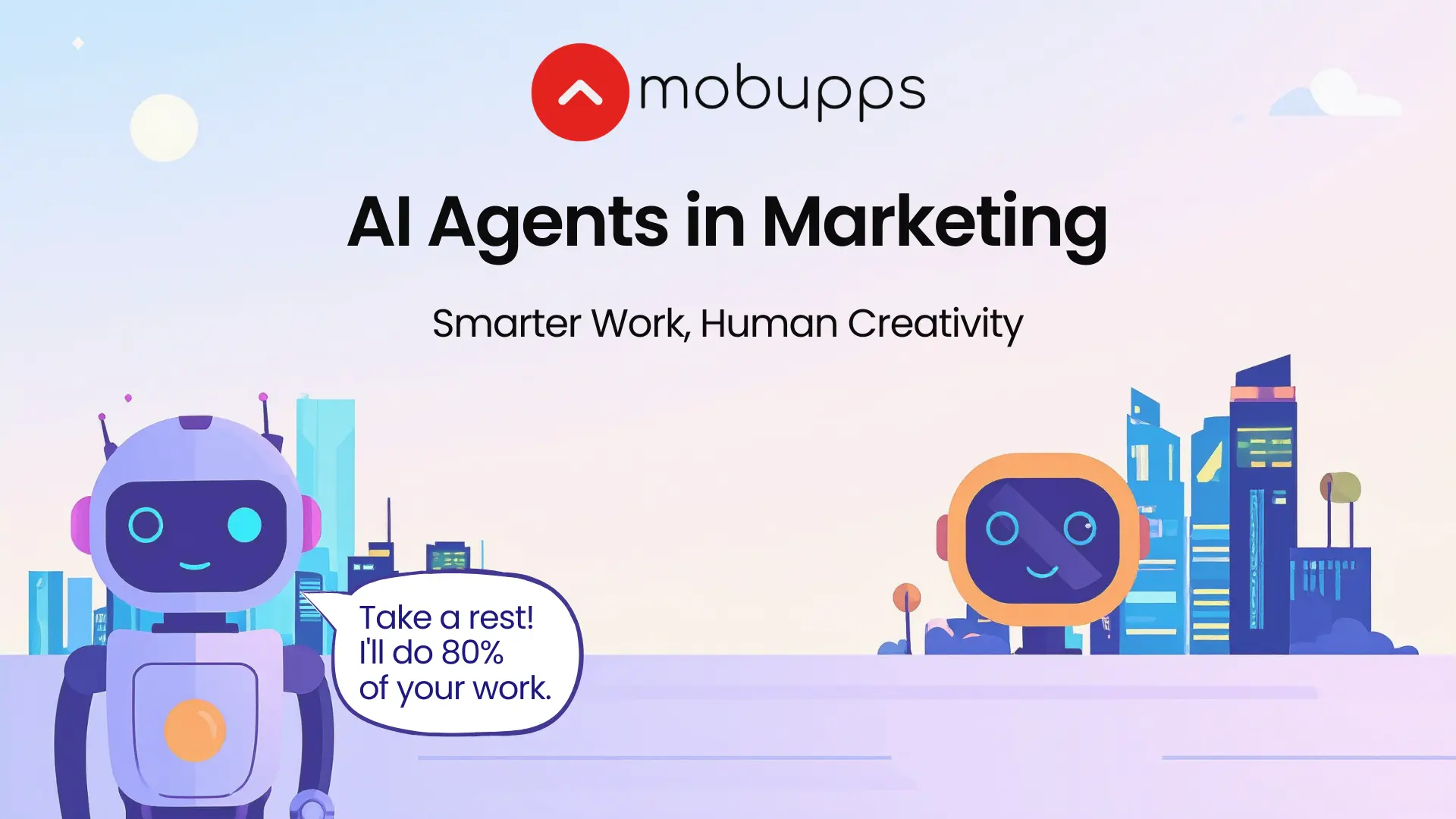
AI agents are not here to replace marketers. They are here to empower them and change the way marketing teams operate. By automating repetitive tasks, optimizing campaigns in real time, and providing actionable insights, they allow marketers to focus on the high-value work that drives business growth. This combination ensures marketing teams stay innovative, efficient, and results-driven.
The future of marketing is AI plus human collaboration for smarter work, better results, and limitless creativity.
Every day, most marketing teams, probably 99% of them, are stuck running campaigns, digging through data, and tweaking performance by hand. That’s where AI agents can step in. Think of them as smart assistants doing the heavy lifting, so marketers can focus on what matters: strategy, creativity, and keeping their brand voice on point.
According to Gartner, AI agents are set to independently handle 15% of daily workplace decisions by 2028, up from less than 1% in 2024. The trend is already visible in marketing: AI agents help teams work smarter, act faster, and make data-driven decisions in real time.
AI marketing agents are autonomous software systems that can make decisions, execute tasks, and optimize workflows with minimal human intervention. Unlike traditional AI tools, which mostly provide reports or recommendations, these agents act on insights directly. They can adjust campaigns, personalize content, score leads, and reallocate budgets automatically. In other words, AI agents handle the operational work, while human marketers focus on strategy, creativity, and brand storytelling.
Here are the most common and impactful ways AI agents drive results in marketing and adtech:
The numbers don’t lie: 88% of digital marketers are using AI every day, and nearly all businesses plan to invest more in AI tools over the next few years. AI‑powered automation saves teams 6+ hours per week on repetitive work, drives 320% more revenue in automated campaigns, and helps marketers act faster with real‑time insights. What’s more, adoption has jumped from 29% to 76% in just a few years, showing AI has moved from experimental to essential. (Source & Source)
Integrating AI agents into your marketing stack delivers multiple benefits:
AI agents are not here to replace marketers. They are here to empower them and change the way marketing teams operate. By automating repetitive tasks, optimizing campaigns in real time, and providing actionable insights, they allow marketers to focus on the high-value work that drives business growth. This combination ensures marketing teams stay innovative, efficient, and results-driven.
The future of marketing is AI plus human collaboration for smarter work, better results, and limitless creativity.