After the intense holiday shopping season of Christmas and New Year, consumer spending often slows down. Many brands pause their marketing activities while customers recover from heavy holiday purchases. However, this time of year is a missed chance for marketers.
Easter arrives at the perfect time to re-engage audiences. With its themes of renewal, celebration, and springtime optimism, Easter offers brands a chance to reconnect with consumers through creative campaigns, seasonal products, and interactive digital experiences.
For marketers in retail, e-commerce, and digital advertising, Easter is a major retail moment worth billions in consumer spending.
Easter has evolved far beyond a traditional religious celebration. Today, it represents a major seasonal retail event with growing economic impact. In 2025, Americans planned to spend approximately $23.6 billion on Easter, up from $22.4 billion in 2024 and approaching the record $24 billion spent in 2023. On average, consumers budgeted $185 per person for Easter-related purchases. (source: National Retail Federation)
The holiday’s retail influence has expanded significantly over time. Compared to 2009, when total Easter spending was just over $12 billion, it has nearly doubled. For brands, Easter is a strategic marketing opportunity that arrives just as post-holiday engagement tends to dip.
Beyond spending power, Easter also offers strong emotional and seasonal themes that marketers can leverage:
Combining with creative marketing strategies, these themes help brands reconnect with audiences after the quiet months.
Understanding how consumers celebrate and spend during Easter helps brands tailor their marketing campaigns more effectively. Consumers typically spread their Easter budgets across several product categories:
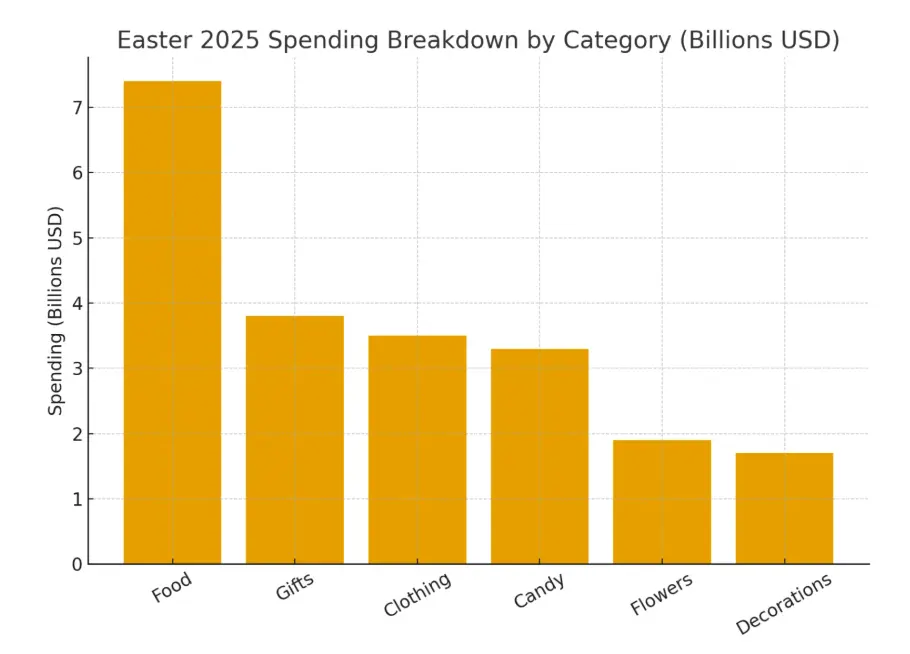
Candy and food dominate the holiday experience, reflecting its family-focused, celebratory nature. In fact:
Easter spending varies across demographics, with several groups driving the majority of purchases.
Parents with children: Families with young children are among the biggest Easter spenders. Many of them participate in Easter egg hunts, gift baskets, family meals outdoors, and wear holiday-themed clothing. More than 54% of families with children organize Easter egg hunts, making it one of the most popular traditions.
Millennials and Gen Z: Younger consumers often blend online shopping, social media inspiration, and experience-based celebrations. They are also more likely to share Easter experiences online, helping brands benefit from organic exposure and user-generated content.
Instead of static campaigns, brands leverage AI to create interactive, personalized experiences that feel fun, playful, and relevant to the season. Around 33% of consumers now purchase Easter items online, attracted by convenience, product variety, and promotional deals. Check out some of the ideas that encourage customers to interact:
AI-powered interactive content is most effective when it appears where your target audience already spends time. Instead of investing all of your Easter marketing efforts in one place, distribute interactive experiences across multiple channels:
Websites can host interactive experiences, such as:
Social platforms are ideal for AI-driven seasonal content, such as:
AI in email marketing can turn traditional email campaigns into eye-catching experiences.
Such emails will stand out in crowded inboxes and increase click-through rates.
The key takeaway: Easter is a powerful marketing opportunity for brands looking to reconnect with consumers after the winter slowdown. Last year's $23.6 billion in spending confirmed its strong popularity across generations and the enormous potential for retailers, e-commerce brands, and digital marketers.
Leverage consumer insights, seasonal creativity, and AI-powered experiences to turn Easter into a profitable moment. Boost engagement, drive sales, and strengthen long-term customer relationships with Mobupps.
After the intense holiday shopping season of Christmas and New Year, consumer spending often slows down. Many brands pause their marketing activities while customers recover from heavy holiday purchases. However, this time of year is a missed chance for marketers.
Easter arrives at the perfect time to re-engage audiences. With its themes of renewal, celebration, and springtime optimism, Easter offers brands a chance to reconnect with consumers through creative campaigns, seasonal products, and interactive digital experiences.
For marketers in retail, e-commerce, and digital advertising, Easter is a major retail moment worth billions in consumer spending.
Easter has evolved far beyond a traditional religious celebration. Today, it represents a major seasonal retail event with growing economic impact. In 2025, Americans planned to spend approximately $23.6 billion on Easter, up from $22.4 billion in 2024 and approaching the record $24 billion spent in 2023. On average, consumers budgeted $185 per person for Easter-related purchases. (source: National Retail Federation)
The holiday’s retail influence has expanded significantly over time. Compared to 2009, when total Easter spending was just over $12 billion, it has nearly doubled. For brands, Easter is a strategic marketing opportunity that arrives just as post-holiday engagement tends to dip.
Beyond spending power, Easter also offers strong emotional and seasonal themes that marketers can leverage:
Combining with creative marketing strategies, these themes help brands reconnect with audiences after the quiet months.
Understanding how consumers celebrate and spend during Easter helps brands tailor their marketing campaigns more effectively. Consumers typically spread their Easter budgets across several product categories:
Candy and food dominate the holiday experience, reflecting its family-focused, celebratory nature. In fact:
Easter spending varies across demographics, with several groups driving the majority of purchases.
Parents with children: Families with young children are among the biggest Easter spenders. Many of them participate in Easter egg hunts, gift baskets, family meals outdoors, and wear holiday-themed clothing. More than 54% of families with children organize Easter egg hunts, making it one of the most popular traditions.
Millennials and Gen Z: Younger consumers often blend online shopping, social media inspiration, and experience-based celebrations. They are also more likely to share Easter experiences online, helping brands benefit from organic exposure and user-generated content.
Instead of static campaigns, brands leverage AI to create interactive, personalized experiences that feel fun, playful, and relevant to the season. Around 33% of consumers now purchase Easter items online, attracted by convenience, product variety, and promotional deals. Check out some of the ideas that encourage customers to interact:
AI-powered interactive content is most effective when it appears where your target audience already spends time. Instead of investing all of your Easter marketing efforts in one place, distribute interactive experiences across multiple channels:
Websites can host interactive experiences, such as:
Social platforms are ideal for AI-driven seasonal content, such as:
AI in email marketing can turn traditional email campaigns into eye-catching experiences.
Such emails will stand out in crowded inboxes and increase click-through rates.
The key takeaway: Easter is a powerful marketing opportunity for brands looking to reconnect with consumers after the winter slowdown. Last year's $23.6 billion in spending confirmed its strong popularity across generations and the enormous potential for retailers, e-commerce brands, and digital marketers.
Leverage consumer insights, seasonal creativity, and AI-powered experiences to turn Easter into a profitable moment. Boost engagement, drive sales, and strengthen long-term customer relationships with Mobupps.