China’s Beverage Revolution: From Local Taste to Global Disruption
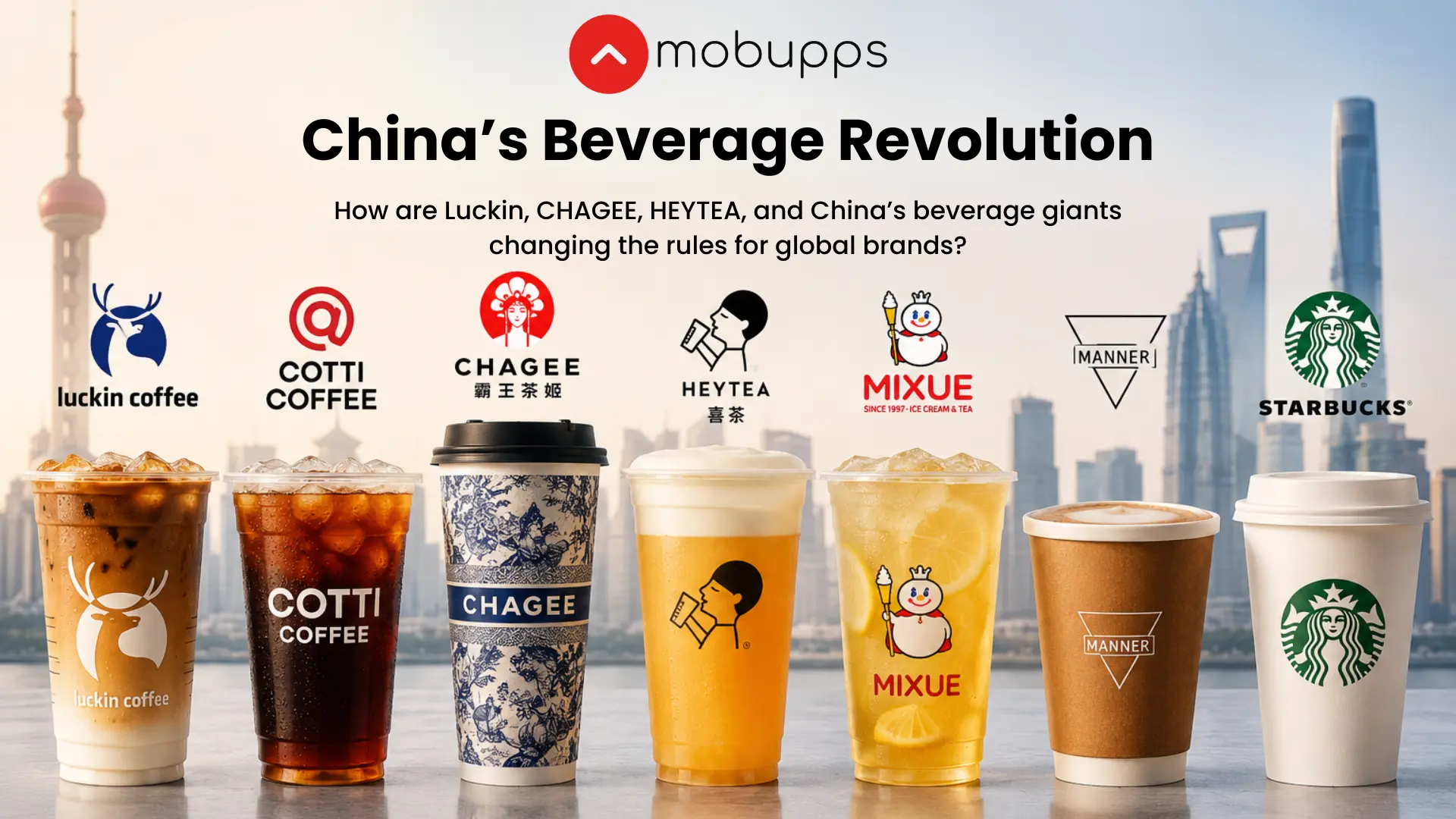


Walk through almost any major Chinese city today, and you will notice something remarkable. Coffee shops are everywhere. So are tea shops. Convenience stores are filled with new beverages, delivery platforms can bring drinks to your door in minutes, and established brands constantly introduce new flavours, collaborations, and limited editions. But the most interesting part isn't simply the number of beverages being sold. It is who is creating the brands and business models behind them.
Starbucks is there. So are global beer, spirits and soft-drink companies. But alongside them are Luckin Coffee, COTTI, CHAGEE, HEYTEA, Mixue, Manner and a growing generation of China-born beverage brands.
These companies are not merely copying Western concepts. They are building around distinctly Chinese consumer behaviours: mobile ordering, instant delivery, high-frequency consumption, aggressive value propositions, rapid product innovation and digital loyalty.
That has changed the competitive equation. For decades, the model was: Global brand enters China, then localizes and scales. Today, we are increasingly seeing a combination of Chinese consumer insights, China-native products, digital operating models, rapid scaling, and international expansion.
That is why China's beverage industry has become one of the world's most interesting laboratories for consumer-brand innovation.
China's overall consumption market provides the backdrop. The country's catering industry generated approximately RMB5.8 trillion in revenue in 2025, while total retail sales of consumer goods reached around RMB50 trillion. But the headline market size doesn't tell the most interesting story. Within beverages, some categories are experiencing much faster structural change.
China's freshly made tea beverage market, for example, grew from approximately RMB 102.2 billion in 2019 to RMB 272.7 billion in 2024, representing a CAGR of about 21.7%. It is projected to reach approximately RMB 426 billion by 2028.
Meanwhile, coffee has developed into one of the world's most competitive markets, with specialist coffee and tea chains rapidly gaining share. Euromonitor's latest China cafés and bars research identifies Luckin Coffee as the leading player by value in 2025, while also noting that chains are taking share from independent operators through lower prices, consistent quality, loyalty programmes, frequent product launches, and faster delivery.
This is the key point: China's beverage market is not simply growing. It is becoming more organized, more digital, and more competitive.
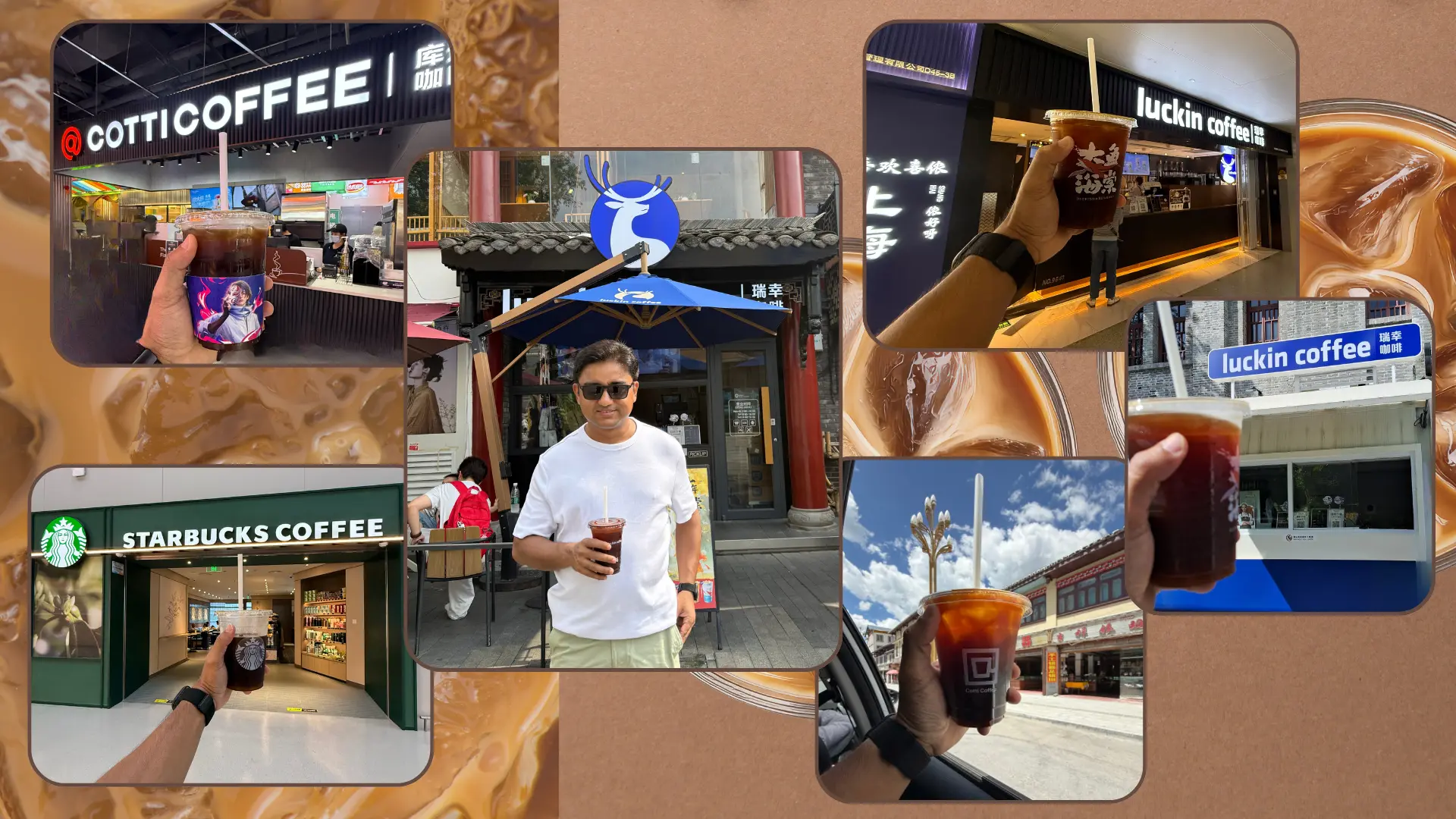
If one brand explains China's beverage disruption better than almost any other, it is Luckin Coffee. Starbucks helped introduce and popularize modern café culture in China.
Luckin changed the economics and operating model of the coffee industry. The traditional premium café proposition was broadly: Coffee + café + experience + premium price. Luckin built around: Coffee + smartphone + convenience + value + delivery + frequency. That difference matters. Luckin didn't require consumers to spend an hour sitting in a café. It could meet them on the way to work, through an app, at a pickup point, or at home.
The scale of the model is extraordinary. Luckin ended 2025 with 31,048 stores, after opening 8,708 net new stores during the year. Its fourth-quarter average monthly transacting customers reached 98.4 million, while quarterly revenue increased 32.9% year-on-year to RMB 12.8 billion.
The real Luckin advantage isn't simply price. It is tempting to reduce Luckin's success to aggressive pricing. Price matters, but the deeper concept is value density.
Consumers receive a combination of:
That encourages high-frequency consumption. And frequency is critical in beverage economics. A consumer who buys coffee several times a week is fundamentally more valuable than someone who considers coffee an occasional premium purchase.
Luckin's strategy therefore changes the consumer question from: “Do I want to spend money on coffee today?” to: “Why wouldn't I order one?” That is a much more powerful proposition.
COTTI entered China's coffee market with an aggressive value proposition and rapid franchise-led expansion. Its significance goes beyond its own store count. COTTI demonstrates that once a successful operating model has been proven, competitors can move quickly.
That means the competitive advantage is no longer simply having a coffee brand. It becomes: product + supply chain + pricing + store economics + digital acquisition + franchise economics + innovation speed. This is one reason China's coffee market has become so competitive.
The most revealing part of China's coffee story isn't actually Luckin's growth. It is Starbucks' response. In 2026, Starbucks finalized a joint venture with Boyu Capital for its China retail operations. Boyu holds 60%, while Starbucks retains 40% and continues to own and license the Starbucks brand and intellectual property.
The venture covers approximately 8,000 coffeehouses and has a long-term ambition of reaching as many as 20,000 locations. Starbucks describes the new model around deeper local relevance, digital engagement, localized products, and expansion into additional cities.
The strategic message is significant: the next Starbucks in China will need to be even more China-native. The global brand remains valuable. But global brand equity alone is no longer sufficient.
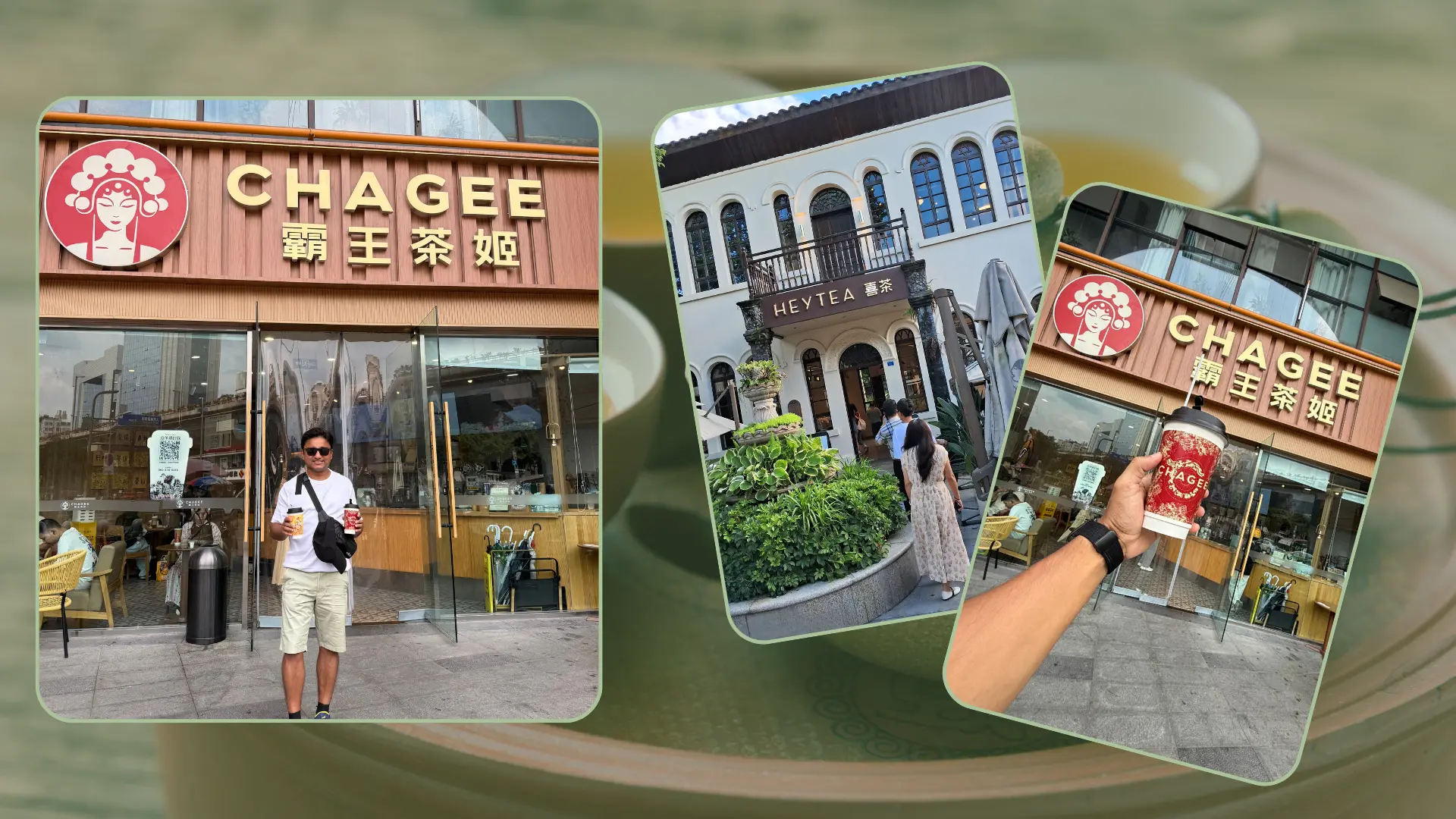
Coffee is a category China adopted and reinvented. Tea is different. China already owns the cultural heritage. The opportunity was to make that heritage relevant to younger consumers. That is exactly what brands such as CHAGEE and HEYTEA have been doing.
The freshly made tea market has expanded rapidly, and premiumization is particularly interesting. The share of freshly made tea beverages priced at RMB17 or more increased from 10.9% in 2019 to 25.9% in 2024.
So, Chinese consumers aren't simply drinking more tea. They are increasingly willing to pay for a better tea experience.
HEYTEA took a very different route from traditional tea retail. Its proposition combines: tea + fresh fruit + cheese foam + design + novelty + social media + collaborations.
The beverage becomes content. A new product launch becomes an event. A limited edition can become a social-media moment. A store can become a destination.
The consumer isn't only asking: "Does this taste good?" They are also asking: "Is this interesting?" "Is this new?" "Would I share this?"
That is modern consumer-brand building. HEYTEA's importance therefore goes beyond tea. It helped demonstrate that a Chinese beverage brand could build lifestyle equity around a traditionally familiar product.
CHAGEE has taken another route. Its proposition is closer to: Chinese tea heritage + premium experience + standardized retail + technology.
By the end of 2025, CHAGEE had 7,453 teahouses across Greater China and overseas, up 15.7% year-on-year. Its total 2025 GMV reached approximately RMB31.58 billion.
But the numbers also reveal the next challenge. The majority of its stores are franchised. That enables rapid expansion and capital-efficient growth, but it also creates a critical strategic question: Can a brand maintain consumer experience, product consistency, and store economics while scaling at extraordinary speed?
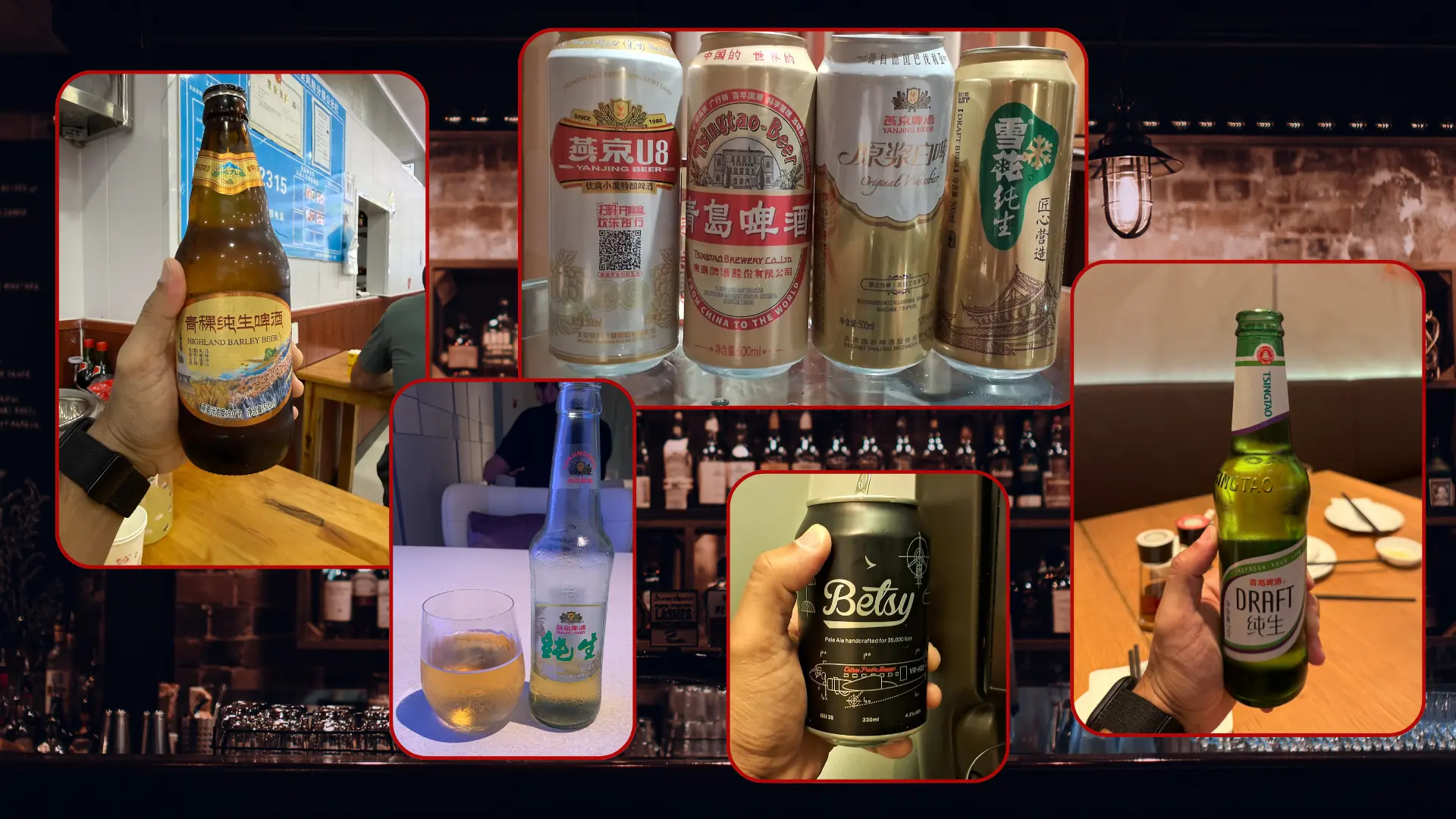
China's beverage revolution becomes even more interesting when alcohol enters the picture. In coffee, Chinese brands are challengers. In beer and baijiu, Chinese brands are often the incumbents. Take beer.
China Resources Beer and Tsingtao remain the two leading players by volume. Euromonitor estimates that China Resources Beer held approximately 25% of China's beer volume share in 2025.
China Resources Beer reported beer sales of approximately 11.03 million kilolitres in 2025, up 1.4% year-on-year. Its sub-premium and above segment represented nearly 25% of total volume, with premium products continuing to grow faster than the overall market.
This creates a very different competitive dynamic. Global companies such as AB InBev and Heineken don't necessarily need to replace Snow or Tsingtao in the mass market.
Instead, the battle is increasingly about: premium beer + super-premium beer + craft + imported brands + lifestyle occasions.
If coffee demonstrates Chinese disruption, baijiu demonstrates the extraordinary power of cultural equity. Brands such as Moutai, Wuliangye, and Luzhou Laojiao have built enormous value around: heritage + status + gifting + business relationships + celebration + Chinese identity. That is an extremely difficult proposition for a global spirits company to reproduce. But even this category is facing a generational challenge.
China's alcohol market is undergoing a structural reset as younger consumers increasingly favour casual social occasions, at-home drinking, smaller groups and on-demand purchasing. IWSR reported that total beverage alcohol volume in China fell approximately 4% in 2025, while baijiu continued to decline and some other categories, including RTDs, grew.
That means traditional brands have to ask: How do we preserve heritage while remaining relevant to younger consumers?
Moutai's attempts to extend into products such as baijiu-infused ice cream and other lifestyle products are an example of this broader challenge.
One of China's greatest competitive advantages isn't the beverage itself. It is the ecosystem around it. A consumer can discover, search, order, pay, receive, review and reorder almost entirely through a smartphone.
That changes what a beverage company can become. It can simultaneously operate as: retailer + technology platform + loyalty programme + delivery business + content engine. This behaviour extends well beyond specialist beverage companies.
The beverage sector has been especially well suited to this environment because coffee and tea are high-frequency, relatively low-ticket, easy to transport, and easy to personalize. That is a powerful combination.
Moreover, China's beverage consumers are both value-conscious and premium. This is one of the most interesting characteristics of the market. The same consumer can:
It reflects a more sophisticated concept of value. Consumers are willing to pay a premium when they understand what they're getting: better ingredients, better experience, stronger brand, novelty, convenience, or status. But they are equally willing to trade down when the premium doesn't feel justified.
The result is a market that is simultaneously experiencing: premiumization + value-seeking. That means consumers are becoming more selective about where they spend their premium yuan.
Looking at coffee, tea, beer, and spirits together, the evolution becomes clear.
Furthermore, the product itself becomes part of the evolution at every stage. That’s why Chinese beverage brands constantly launch seasonal flavours, celebrity collaborations, entertainment partnerships, regional products, functional ingredients, limited editions, new packaging, and lower-sugar products.
The reverse journey will be more difficult. A product that works in Shanghai may not work in Singapore. A price that works in China may not work in the United States. A Chinese cultural reference may not travel. A franchise model may need to change.
Chinese brands going overseas therefore face the same lesson that global brands learned when entering China: Localization is not optional. But Chinese companies now have something powerful to export – a proven digital and operating model.
Finally, China is becoming a F&B innovation laboratory. China's beverage story is no longer simply about China-born beverage brands versus global beverage companies. It is about a much broader shift in how consumer brands are built. The emerging playbook is: understand local behaviour, build around it, scale digitally, innovate rapidly, and take the model global.
Are you ready to grow in China and worldwide? Success requires understanding local consumers, choosing the right channels, and building a strategy designed for how people actually discover, engage with, and buy from brands in China.
Whether you're a global beverage brand looking to enter China or a China-born brand ready to expand internationally, Mobupps can help you turn market insights into a performance-driven growth strategy. Contact Mobupps at marketing@mobupps.com. Let's build your strategy.
Walk through almost any major Chinese city today, and you will notice something remarkable. Coffee shops are everywhere. So are tea shops. Convenience stores are filled with new beverages, delivery platforms can bring drinks to your door in minutes, and established brands constantly introduce new flavours, collaborations, and limited editions. But the most interesting part isn't simply the number of beverages being sold. It is who is creating the brands and business models behind them.
Starbucks is there. So are global beer, spirits and soft-drink companies. But alongside them are Luckin Coffee, COTTI, CHAGEE, HEYTEA, Mixue, Manner and a growing generation of China-born beverage brands.
These companies are not merely copying Western concepts. They are building around distinctly Chinese consumer behaviours: mobile ordering, instant delivery, high-frequency consumption, aggressive value propositions, rapid product innovation and digital loyalty.
That has changed the competitive equation. For decades, the model was: Global brand enters China, then localizes and scales. Today, we are increasingly seeing a combination of Chinese consumer insights, China-native products, digital operating models, rapid scaling, and international expansion.
That is why China's beverage industry has become one of the world's most interesting laboratories for consumer-brand innovation.
China's overall consumption market provides the backdrop. The country's catering industry generated approximately RMB5.8 trillion in revenue in 2025, while total retail sales of consumer goods reached around RMB50 trillion. But the headline market size doesn't tell the most interesting story. Within beverages, some categories are experiencing much faster structural change.
China's freshly made tea beverage market, for example, grew from approximately RMB 102.2 billion in 2019 to RMB 272.7 billion in 2024, representing a CAGR of about 21.7%. It is projected to reach approximately RMB 426 billion by 2028.
Meanwhile, coffee has developed into one of the world's most competitive markets, with specialist coffee and tea chains rapidly gaining share. Euromonitor's latest China cafés and bars research identifies Luckin Coffee as the leading player by value in 2025, while also noting that chains are taking share from independent operators through lower prices, consistent quality, loyalty programmes, frequent product launches, and faster delivery.
This is the key point: China's beverage market is not simply growing. It is becoming more organized, more digital, and more competitive.
If one brand explains China's beverage disruption better than almost any other, it is Luckin Coffee. Starbucks helped introduce and popularize modern café culture in China.
Luckin changed the economics and operating model of the coffee industry. The traditional premium café proposition was broadly: Coffee + café + experience + premium price. Luckin built around: Coffee + smartphone + convenience + value + delivery + frequency. That difference matters. Luckin didn't require consumers to spend an hour sitting in a café. It could meet them on the way to work, through an app, at a pickup point, or at home.
The scale of the model is extraordinary. Luckin ended 2025 with 31,048 stores, after opening 8,708 net new stores during the year. Its fourth-quarter average monthly transacting customers reached 98.4 million, while quarterly revenue increased 32.9% year-on-year to RMB 12.8 billion.
The real Luckin advantage isn't simply price. It is tempting to reduce Luckin's success to aggressive pricing. Price matters, but the deeper concept is value density.
Consumers receive a combination of:
That encourages high-frequency consumption. And frequency is critical in beverage economics. A consumer who buys coffee several times a week is fundamentally more valuable than someone who considers coffee an occasional premium purchase.
Luckin's strategy therefore changes the consumer question from: “Do I want to spend money on coffee today?” to: “Why wouldn't I order one?” That is a much more powerful proposition.
COTTI entered China's coffee market with an aggressive value proposition and rapid franchise-led expansion. Its significance goes beyond its own store count. COTTI demonstrates that once a successful operating model has been proven, competitors can move quickly.
That means the competitive advantage is no longer simply having a coffee brand. It becomes: product + supply chain + pricing + store economics + digital acquisition + franchise economics + innovation speed. This is one reason China's coffee market has become so competitive.
The most revealing part of China's coffee story isn't actually Luckin's growth. It is Starbucks' response. In 2026, Starbucks finalized a joint venture with Boyu Capital for its China retail operations. Boyu holds 60%, while Starbucks retains 40% and continues to own and license the Starbucks brand and intellectual property.
The venture covers approximately 8,000 coffeehouses and has a long-term ambition of reaching as many as 20,000 locations. Starbucks describes the new model around deeper local relevance, digital engagement, localized products, and expansion into additional cities.
The strategic message is significant: the next Starbucks in China will need to be even more China-native. The global brand remains valuable. But global brand equity alone is no longer sufficient.
Coffee is a category China adopted and reinvented. Tea is different. China already owns the cultural heritage. The opportunity was to make that heritage relevant to younger consumers. That is exactly what brands such as CHAGEE and HEYTEA have been doing.
The freshly made tea market has expanded rapidly, and premiumization is particularly interesting. The share of freshly made tea beverages priced at RMB17 or more increased from 10.9% in 2019 to 25.9% in 2024.
So, Chinese consumers aren't simply drinking more tea. They are increasingly willing to pay for a better tea experience.
HEYTEA took a very different route from traditional tea retail. Its proposition combines: tea + fresh fruit + cheese foam + design + novelty + social media + collaborations.
The beverage becomes content. A new product launch becomes an event. A limited edition can become a social-media moment. A store can become a destination.
The consumer isn't only asking: "Does this taste good?" They are also asking: "Is this interesting?" "Is this new?" "Would I share this?"
That is modern consumer-brand building. HEYTEA's importance therefore goes beyond tea. It helped demonstrate that a Chinese beverage brand could build lifestyle equity around a traditionally familiar product.
CHAGEE has taken another route. Its proposition is closer to: Chinese tea heritage + premium experience + standardized retail + technology.
By the end of 2025, CHAGEE had 7,453 teahouses across Greater China and overseas, up 15.7% year-on-year. Its total 2025 GMV reached approximately RMB31.58 billion.
But the numbers also reveal the next challenge. The majority of its stores are franchised. That enables rapid expansion and capital-efficient growth, but it also creates a critical strategic question: Can a brand maintain consumer experience, product consistency, and store economics while scaling at extraordinary speed?
China's beverage revolution becomes even more interesting when alcohol enters the picture. In coffee, Chinese brands are challengers. In beer and baijiu, Chinese brands are often the incumbents. Take beer.
China Resources Beer and Tsingtao remain the two leading players by volume. Euromonitor estimates that China Resources Beer held approximately 25% of China's beer volume share in 2025.
China Resources Beer reported beer sales of approximately 11.03 million kilolitres in 2025, up 1.4% year-on-year. Its sub-premium and above segment represented nearly 25% of total volume, with premium products continuing to grow faster than the overall market.
This creates a very different competitive dynamic. Global companies such as AB InBev and Heineken don't necessarily need to replace Snow or Tsingtao in the mass market.
Instead, the battle is increasingly about: premium beer + super-premium beer + craft + imported brands + lifestyle occasions.
If coffee demonstrates Chinese disruption, baijiu demonstrates the extraordinary power of cultural equity. Brands such as Moutai, Wuliangye, and Luzhou Laojiao have built enormous value around: heritage + status + gifting + business relationships + celebration + Chinese identity. That is an extremely difficult proposition for a global spirits company to reproduce. But even this category is facing a generational challenge.
China's alcohol market is undergoing a structural reset as younger consumers increasingly favour casual social occasions, at-home drinking, smaller groups and on-demand purchasing. IWSR reported that total beverage alcohol volume in China fell approximately 4% in 2025, while baijiu continued to decline and some other categories, including RTDs, grew.
That means traditional brands have to ask: How do we preserve heritage while remaining relevant to younger consumers?
Moutai's attempts to extend into products such as baijiu-infused ice cream and other lifestyle products are an example of this broader challenge.
One of China's greatest competitive advantages isn't the beverage itself. It is the ecosystem around it. A consumer can discover, search, order, pay, receive, review and reorder almost entirely through a smartphone.
That changes what a beverage company can become. It can simultaneously operate as: retailer + technology platform + loyalty programme + delivery business + content engine. This behaviour extends well beyond specialist beverage companies.
The beverage sector has been especially well suited to this environment because coffee and tea are high-frequency, relatively low-ticket, easy to transport, and easy to personalize. That is a powerful combination.
Moreover, China's beverage consumers are both value-conscious and premium. This is one of the most interesting characteristics of the market. The same consumer can:
It reflects a more sophisticated concept of value. Consumers are willing to pay a premium when they understand what they're getting: better ingredients, better experience, stronger brand, novelty, convenience, or status. But they are equally willing to trade down when the premium doesn't feel justified.
The result is a market that is simultaneously experiencing: premiumization + value-seeking. That means consumers are becoming more selective about where they spend their premium yuan.
Looking at coffee, tea, beer, and spirits together, the evolution becomes clear.
Furthermore, the product itself becomes part of the evolution at every stage. That’s why Chinese beverage brands constantly launch seasonal flavours, celebrity collaborations, entertainment partnerships, regional products, functional ingredients, limited editions, new packaging, and lower-sugar products.
The reverse journey will be more difficult. A product that works in Shanghai may not work in Singapore. A price that works in China may not work in the United States. A Chinese cultural reference may not travel. A franchise model may need to change.
Chinese brands going overseas therefore face the same lesson that global brands learned when entering China: Localization is not optional. But Chinese companies now have something powerful to export – a proven digital and operating model.
Finally, China is becoming a F&B innovation laboratory. China's beverage story is no longer simply about China-born beverage brands versus global beverage companies. It is about a much broader shift in how consumer brands are built. The emerging playbook is: understand local behaviour, build around it, scale digitally, innovate rapidly, and take the model global.
Are you ready to grow in China and worldwide? Success requires understanding local consumers, choosing the right channels, and building a strategy designed for how people actually discover, engage with, and buy from brands in China.
Whether you're a global beverage brand looking to enter China or a China-born brand ready to expand internationally, Mobupps can help you turn market insights into a performance-driven growth strategy. Contact Mobupps at marketing@mobupps.com. Let's build your strategy.