China’s Food Industry: Locals vs. Global Competition
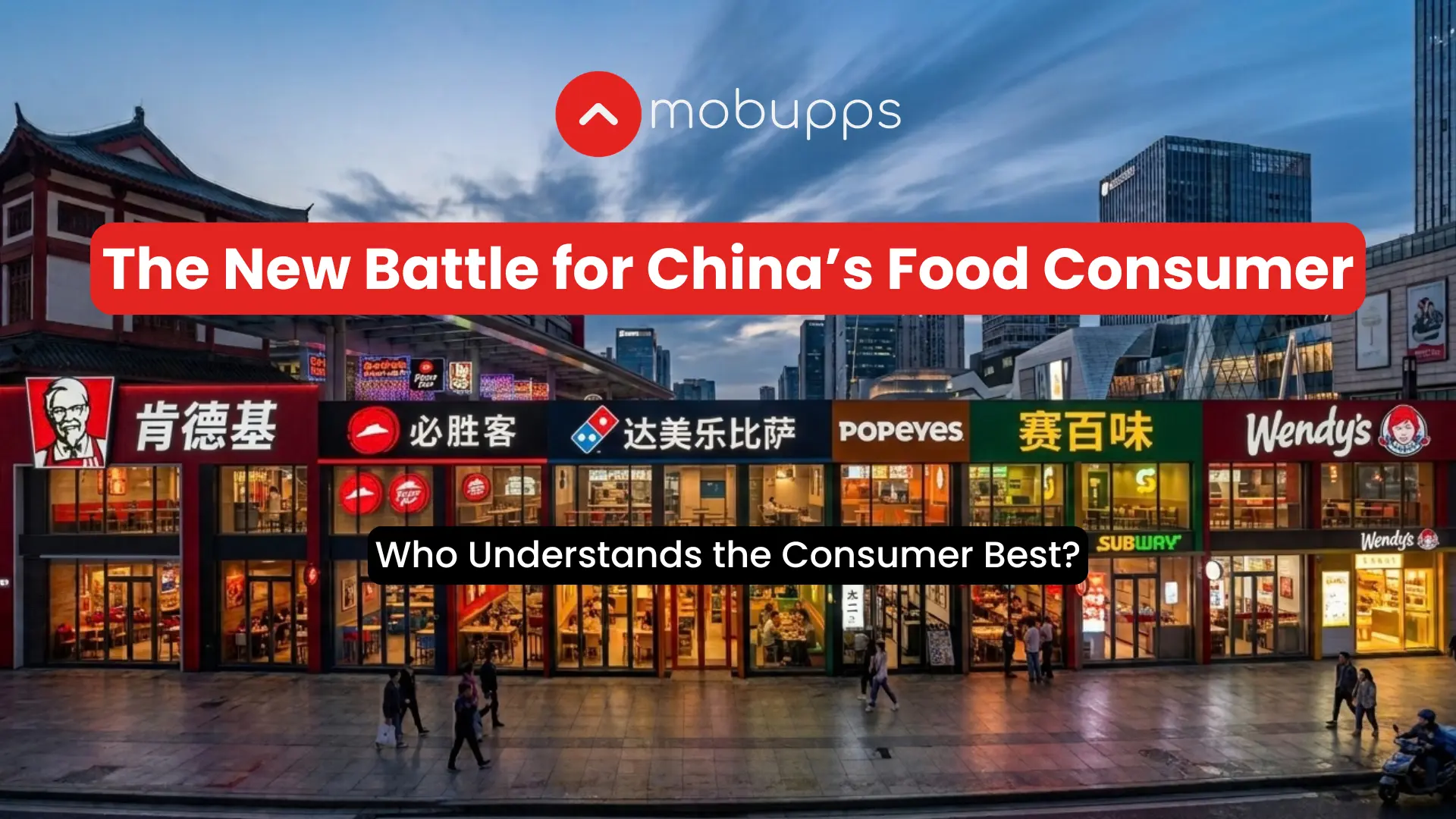


For decades, China's food industry was one of the world's great localization stories. Global restaurant brands entered the country, adapted their menus, learned local consumer behaviour, and built enormous businesses.
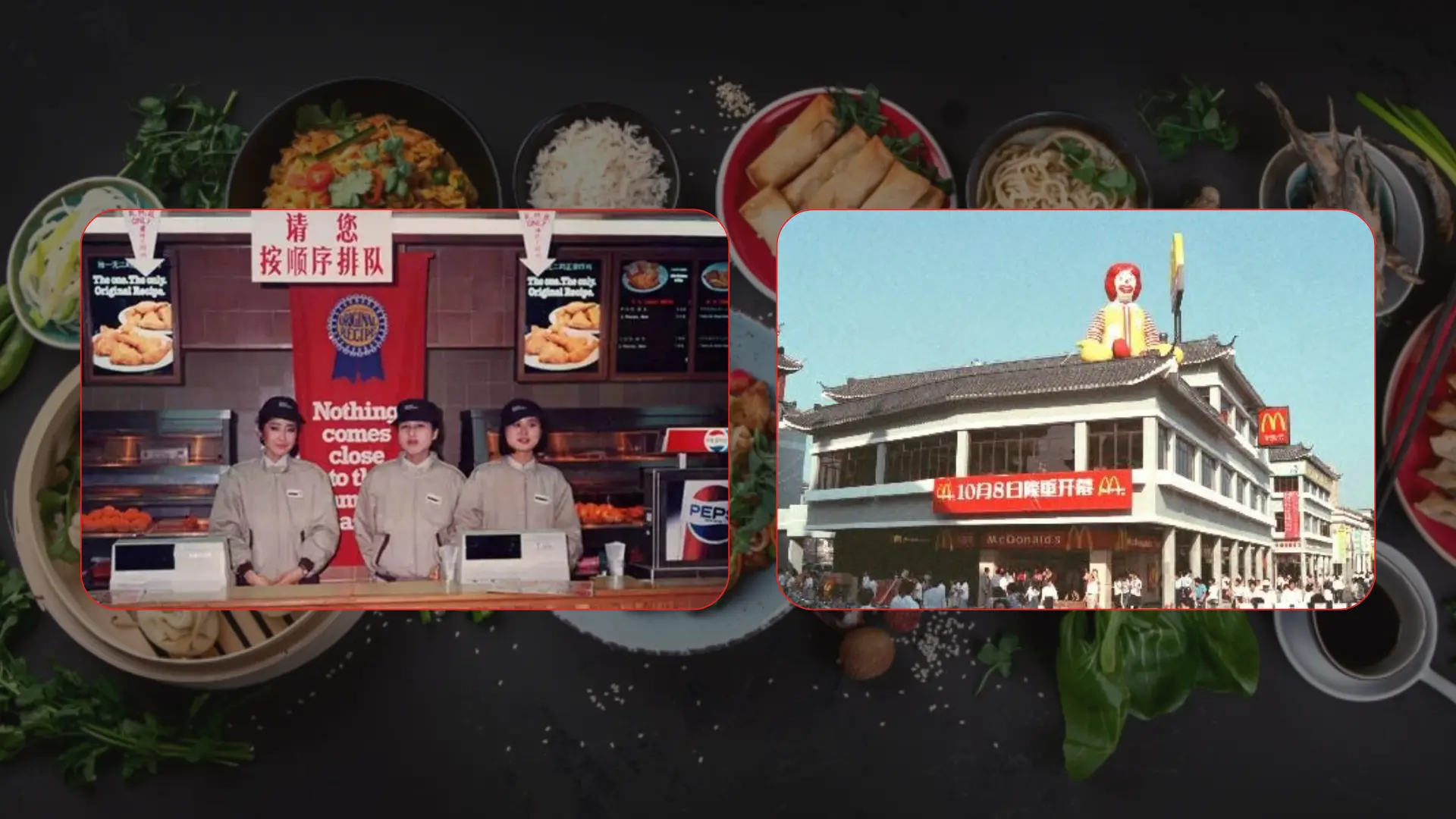
KFC entered mainland China in 1987. Pizza Hut and McDonald's followed in 1990. These companies didn't simply export American food. They learned how to build Chinese businesses around global brands.
But the competitive environment is changing again. China now has a vast ecosystem of home-grown food chains across hotpot, noodles, dumplings, rice meals, bakery, snacks, regional cuisines, and quick-service restaurants.
At the same time, global companies such as KFC, Pizza Hut, and McDonald's have learned to operate in the Chinese market with a high degree of adaptability and proficiency.
And it is a much deeper competition than a battle between Chinese and Western food. Mobupps is going to uncover who better understands the Chinese consumer and who can serve it most efficiently.
China's catering industry generated approximately RMB 5.8 trillion in revenue in 2025, according to the China National Bureau of Statistics. That makes foodservice one of the most important components of China's consumer economy.
But the real challenge is the intensity of competition. Consumers have an incredible range of choices, from traditional Chinese cuisine and international quick-service restaurant (QSR) chains to hot pots, noodles, baked goods, and snacks, in a variety of formats, from delivery-only services to ready-to-eat meals and premium restaurants. And all of the above is available through the same digital ecosystem.
Let's identify the key players in the food market and how they manage to drive this competitive industry profitably.
KFC entered China in 1987. Nearly four decades later, describing KFC China simply as an American fast-food company operating in China misses the point of what the business has become. KFC China is deeply integrated into Chinese consumers’ lifestyle. Besides fried chicken, the menu includes rice meals, breakfast, local products, snacks, delivery, and themed digital promotions.
At the end of 2025, KFC had 12,997 restaurants in China. It opened 1,349 net new restaurants during the year, while delivery sales grew 26% and accounted for approximately 48% of KFC's company sales. KFC continues to expand rather than being displaced by locals because it has become China-native enough to compete with China-native businesses.
The first generation of localization was relatively straightforward: change the menu. The second generation is much broader: change the business model around the consumer. That includes smaller formats, digital ordering, localized pricing, Chinese breakfast, regional products, new consumption occasions, franchise expansion, coffee and beverage extensions.
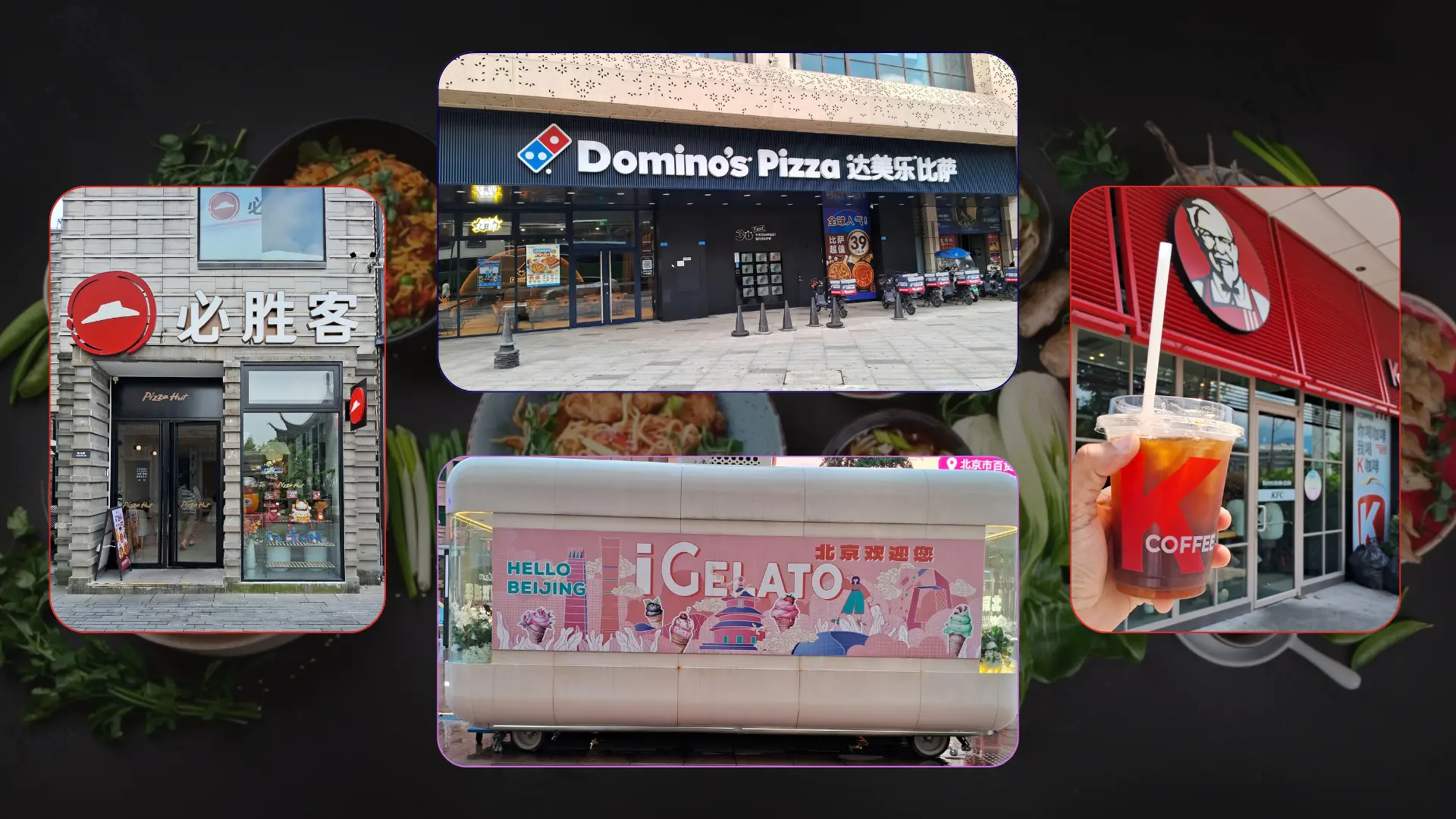
KFC's KCOFFEE concept is a good example. They didn't build a separate national coffee network from scratch; the company leveraged existing stores, kitchens, supply chain, customer traffic, loyalty, and delivery to participate in China's coffee tradition. That is a whole business-model localization, not simply an updated menu.
Pizza Hut tells a slightly different story. In the US, pizza is strongly associated with takeaway and delivery. In China, Pizza Hut developed into something closer to a Western-style casual dining experience. The brand positioned itself as "we are bigger than delivering pizza". It's a cafe with pasta, salads, desserts, and beverages for family meals and friends' gatherings.
By the end of 2025, Pizza Hut China had 4,168 restaurants. Delivery sales grew by 22% and accounted for approximately 47% of company sales. The company also opened a record 444 new stores during 2025. Thus, Pizza Hut's China strategy is a global brand with a local menu and local value, not just an American pizza chain.
Domino's has pursued a different model. Its proposition is much more concentrated around delivering pizza faster and more conveniently. That places it closer to China's increasingly digital food-delivery culture. This creates an important distinction in the Chinese food industry between Pizza Hut, where you go for pizza, and Domino's, where you order pizza. The product category is similar, but the consumer behavior is different.
While global brands were localizing, China was developing an enormous ecosystem of domestic food chains. These include businesses built around regional Chinese cuisine such as hotpot, noodles, dumplings, rice bowls, fried chicken, national bakery, snacks, and other street food.
These brands have one powerful advantage: they don't need to explain the food. They understand the cuisine, the occasion, and the consumer from the beginning. But authenticity alone isn't enough. The most successful chains increasingly combine authenticity, standardization, supply chain, technology, value, and delivery. That combination is what allows a local concept to become a national chain.
China's QSR competition is really about occasions. A consumer doesn't wake up thinking: "Today I need an international QSR." They think: "I'm hungry." Then the decision might depend on the occasion.
The real competitive question therefore becomes: Which brand solves my need best right now? That could mean fastest, cheapest, healthiest, most convenient, most filling, most social, most interesting, and most familiar. That is a much broader competitive battlefield.
Delivery has changed the economics of food. China's food-delivery ecosystem is one of the biggest structural advantages of the market. A restaurant is no longer dependent solely on people walking through its door. The same kitchen can serve dine-in, takeaway, pickup, and delivery simultaneously.
That turns the restaurant into a production and fulfilment node. Yum China's 2025 numbers illustrate how deeply delivery has penetrated the mainstream restaurant industry. Delivery accounts for approximately 48% of KFC's sales and 47% of Pizza Hut's sales. Thus, it is part of the core business model.
China's competitive environment has encouraged restaurant companies to experiment with multiple formats, such as full restaurants, compact stores, mall kiosks, pickup locations, delivery-focused stores, franchise stores, and side-by-side concepts.
KFC's KCOFFEE and KPRO formats illustrate how established brands can use existing real estate to create additional consumer occasions. This is particularly powerful in a market where rent, labour, and delivery economics can make traditional large-format restaurants difficult to scale.
China is also seeing a shift from expansion to growth in quality. China's restaurant market is enormous, but it is a challenging market:
Scale remains valuable, but profitable scale is becoming more important.
With that, value is becoming a strategic foundation because Chinese consumers are increasingly value-conscious. Value doesn't necessarily mean "cheapest", but bigger portions, better ingredients, bundled meals, faster service, better experience, and more convenient delivery. That is why premiumization and value-seeking can coexist.
A consumer may choose a highly affordable meal during the working week and spend significantly more on hotpot, premium dining, or a special occasion at the weekend. It shows they are becoming more selective about where a premium is worth paying.
It would be a mistake to conclude that China-native food companies are simply replacing global brands. Global brands retain powerful assets:
The challenge is that those advantages need to be combined with China-native execution. China has become something of a test case for how deeply a global brand can adapt to local conditions. KFC and Pizza Hut are still global brands, but they increasingly operate according to the customers' expectations.
Their localization is about changing the operating system, including how consumers discover you; how they order; how quickly you deliver; how frequently you launch; how you price; where you locate; what occasions you target; and how you use data. These factors may matter as much as the food itself.
China's food industry is moving from localization to local competition. Put the pieces together, and the evolution becomes clear.
This is the same broad transformation happening in beverages, but with a different starting point.
The reverse journey will bring its own challenges. A Chinese food concept entering another country must understand local tastes, religious and dietary preferences, price ranges, regulatory requirements, labour economics, real estate markets, local competitors, and consumer lifestyles.
Basically, the same challenge global brands faced when they entered China. To succeed, Chinese food companies will need to master China-native operational excellence with international localization.
Consumers increasingly expect value, speed, convenience, digital ordering, constant innovation, local relevance, and multiple ways to consume the same brand. Thus, China's food industry and global brands, such as KFC, Pizza Hut, and McDonald's, have moved the competitive benchmark. Global companies that can deliver those things can continue to grow, while China-native brands that combine authenticity with scale can challenge them. And the most successful companies may ultimately be those that combine both approaches.
China has moved from being a market where global food brands learned to localize to one where global brands increasingly have to learn to operate like China-native companies. That is why the next chapter in China's food industry will be understanding the modern consumer fastest and building the most efficient business based on this knowledge. We are all watching how China is becoming a source of F&B operating models that the rest of the world will increasingly have to pay attention to.
Understanding the Chinese market goes beyond knowing the consumer. Brands need to understand where people discover products, what influences their decisions, which channels drive engagement, and what turns interest into action.
For global food brands entering China, as well as China-born brands expanding into international markets, Mobupps brings together local market understanding, performance expertise, and the right digital channels to build growth strategies that fit each market.
Planning your next move? Get in touch with Mobupps at marketing@mobupps.com. Let’s turn market understanding into measurable growth.
For decades, China's food industry was one of the world's great localization stories. Global restaurant brands entered the country, adapted their menus, learned local consumer behaviour, and built enormous businesses.
KFC entered mainland China in 1987. Pizza Hut and McDonald's followed in 1990. These companies didn't simply export American food. They learned how to build Chinese businesses around global brands.
But the competitive environment is changing again. China now has a vast ecosystem of home-grown food chains across hotpot, noodles, dumplings, rice meals, bakery, snacks, regional cuisines, and quick-service restaurants.
At the same time, global companies such as KFC, Pizza Hut, and McDonald's have learned to operate in the Chinese market with a high degree of adaptability and proficiency.
And it is a much deeper competition than a battle between Chinese and Western food. Mobupps is going to uncover who better understands the Chinese consumer and who can serve it most efficiently.
China's catering industry generated approximately RMB 5.8 trillion in revenue in 2025, according to the China National Bureau of Statistics. That makes foodservice one of the most important components of China's consumer economy.
But the real challenge is the intensity of competition. Consumers have an incredible range of choices, from traditional Chinese cuisine and international quick-service restaurant (QSR) chains to hot pots, noodles, baked goods, and snacks, in a variety of formats, from delivery-only services to ready-to-eat meals and premium restaurants. And all of the above is available through the same digital ecosystem.
Let's identify the key players in the food market and how they manage to drive this competitive industry profitably.
KFC entered China in 1987. Nearly four decades later, describing KFC China simply as an American fast-food company operating in China misses the point of what the business has become. KFC China is deeply integrated into Chinese consumers’ lifestyle. Besides fried chicken, the menu includes rice meals, breakfast, local products, snacks, delivery, and themed digital promotions.
At the end of 2025, KFC had 12,997 restaurants in China. It opened 1,349 net new restaurants during the year, while delivery sales grew 26% and accounted for approximately 48% of KFC's company sales. KFC continues to expand rather than being displaced by locals because it has become China-native enough to compete with China-native businesses.
The first generation of localization was relatively straightforward: change the menu. The second generation is much broader: change the business model around the consumer. That includes smaller formats, digital ordering, localized pricing, Chinese breakfast, regional products, new consumption occasions, franchise expansion, coffee and beverage extensions.
KFC's KCOFFEE concept is a good example. They didn't build a separate national coffee network from scratch; the company leveraged existing stores, kitchens, supply chain, customer traffic, loyalty, and delivery to participate in China's coffee tradition. That is a whole business-model localization, not simply an updated menu.
Pizza Hut tells a slightly different story. In the US, pizza is strongly associated with takeaway and delivery. In China, Pizza Hut developed into something closer to a Western-style casual dining experience. The brand positioned itself as "we are bigger than delivering pizza". It's a cafe with pasta, salads, desserts, and beverages for family meals and friends' gatherings.
By the end of 2025, Pizza Hut China had 4,168 restaurants. Delivery sales grew by 22% and accounted for approximately 47% of company sales. The company also opened a record 444 new stores during 2025. Thus, Pizza Hut's China strategy is a global brand with a local menu and local value, not just an American pizza chain.
Domino's has pursued a different model. Its proposition is much more concentrated around delivering pizza faster and more conveniently. That places it closer to China's increasingly digital food-delivery culture. This creates an important distinction in the Chinese food industry between Pizza Hut, where you go for pizza, and Domino's, where you order pizza. The product category is similar, but the consumer behavior is different.
While global brands were localizing, China was developing an enormous ecosystem of domestic food chains. These include businesses built around regional Chinese cuisine such as hotpot, noodles, dumplings, rice bowls, fried chicken, national bakery, snacks, and other street food.
These brands have one powerful advantage: they don't need to explain the food. They understand the cuisine, the occasion, and the consumer from the beginning. But authenticity alone isn't enough. The most successful chains increasingly combine authenticity, standardization, supply chain, technology, value, and delivery. That combination is what allows a local concept to become a national chain.
China's QSR competition is really about occasions. A consumer doesn't wake up thinking: "Today I need an international QSR." They think: "I'm hungry." Then the decision might depend on the occasion.
The real competitive question therefore becomes: Which brand solves my need best right now? That could mean fastest, cheapest, healthiest, most convenient, most filling, most social, most interesting, and most familiar. That is a much broader competitive battlefield.
Delivery has changed the economics of food. China's food-delivery ecosystem is one of the biggest structural advantages of the market. A restaurant is no longer dependent solely on people walking through its door. The same kitchen can serve dine-in, takeaway, pickup, and delivery simultaneously.
That turns the restaurant into a production and fulfilment node. Yum China's 2025 numbers illustrate how deeply delivery has penetrated the mainstream restaurant industry. Delivery accounts for approximately 48% of KFC's sales and 47% of Pizza Hut's sales. Thus, it is part of the core business model.
China's competitive environment has encouraged restaurant companies to experiment with multiple formats, such as full restaurants, compact stores, mall kiosks, pickup locations, delivery-focused stores, franchise stores, and side-by-side concepts.
KFC's KCOFFEE and KPRO formats illustrate how established brands can use existing real estate to create additional consumer occasions. This is particularly powerful in a market where rent, labour, and delivery economics can make traditional large-format restaurants difficult to scale.
China is also seeing a shift from expansion to growth in quality. China's restaurant market is enormous, but it is a challenging market:
Scale remains valuable, but profitable scale is becoming more important.
With that, value is becoming a strategic foundation because Chinese consumers are increasingly value-conscious. Value doesn't necessarily mean "cheapest", but bigger portions, better ingredients, bundled meals, faster service, better experience, and more convenient delivery. That is why premiumization and value-seeking can coexist.
A consumer may choose a highly affordable meal during the working week and spend significantly more on hotpot, premium dining, or a special occasion at the weekend. It shows they are becoming more selective about where a premium is worth paying.
It would be a mistake to conclude that China-native food companies are simply replacing global brands. Global brands retain powerful assets:
The challenge is that those advantages need to be combined with China-native execution. China has become something of a test case for how deeply a global brand can adapt to local conditions. KFC and Pizza Hut are still global brands, but they increasingly operate according to the customers' expectations.
Their localization is about changing the operating system, including how consumers discover you; how they order; how quickly you deliver; how frequently you launch; how you price; where you locate; what occasions you target; and how you use data. These factors may matter as much as the food itself.
China's food industry is moving from localization to local competition. Put the pieces together, and the evolution becomes clear.
This is the same broad transformation happening in beverages, but with a different starting point.
The reverse journey will bring its own challenges. A Chinese food concept entering another country must understand local tastes, religious and dietary preferences, price ranges, regulatory requirements, labour economics, real estate markets, local competitors, and consumer lifestyles.
Basically, the same challenge global brands faced when they entered China. To succeed, Chinese food companies will need to master China-native operational excellence with international localization.
Consumers increasingly expect value, speed, convenience, digital ordering, constant innovation, local relevance, and multiple ways to consume the same brand. Thus, China's food industry and global brands, such as KFC, Pizza Hut, and McDonald's, have moved the competitive benchmark. Global companies that can deliver those things can continue to grow, while China-native brands that combine authenticity with scale can challenge them. And the most successful companies may ultimately be those that combine both approaches.
China has moved from being a market where global food brands learned to localize to one where global brands increasingly have to learn to operate like China-native companies. That is why the next chapter in China's food industry will be understanding the modern consumer fastest and building the most efficient business based on this knowledge. We are all watching how China is becoming a source of F&B operating models that the rest of the world will increasingly have to pay attention to.
Understanding the Chinese market goes beyond knowing the consumer. Brands need to understand where people discover products, what influences their decisions, which channels drive engagement, and what turns interest into action.
For global food brands entering China, as well as China-born brands expanding into international markets, Mobupps brings together local market understanding, performance expertise, and the right digital channels to build growth strategies that fit each market.
Planning your next move? Get in touch with Mobupps at marketing@mobupps.com. Let’s turn market understanding into measurable growth.